The International Society for Military Ethics in Europe
Leadership. Ethics. Service.
Leadership. Ethics. Service.
Select your language


Benoît Royal Award
Recognises outstanding contributions to the field of defence and military ethics.
Sponsored by C&V Defence
Will be awarded in Brussels early in 2027


Latest EuroISME News
See our featured news below. All news items can be found on our News Page.
5 October 2026
The 2025 winner, Professor Tine Molendijk, receiving her prize from Jean-Marc Vesco, CEO of C&V Defence and John Thomas, President of Euro-ISME, in the presence of Brigadier General (Retired) Benoît Royal. Brussels, 05 October 2026 One year after honouring its first laureate, Euro-ISME and C&V Defence are pleased to announce that nominations for the Benoît Royal Prize a2026 are now open! The Benoît Royal Award is established to recognise outstanding contributions to the field of defence and military ethics. Sponsored by C&V Defence, the award reflects a shared commitment to advancing ethical standards across the European defence community and honouring those who demonstrate exemplary leadership in this critical domain. Nominations are open until 11 December 2026. Read more
25 September 2026
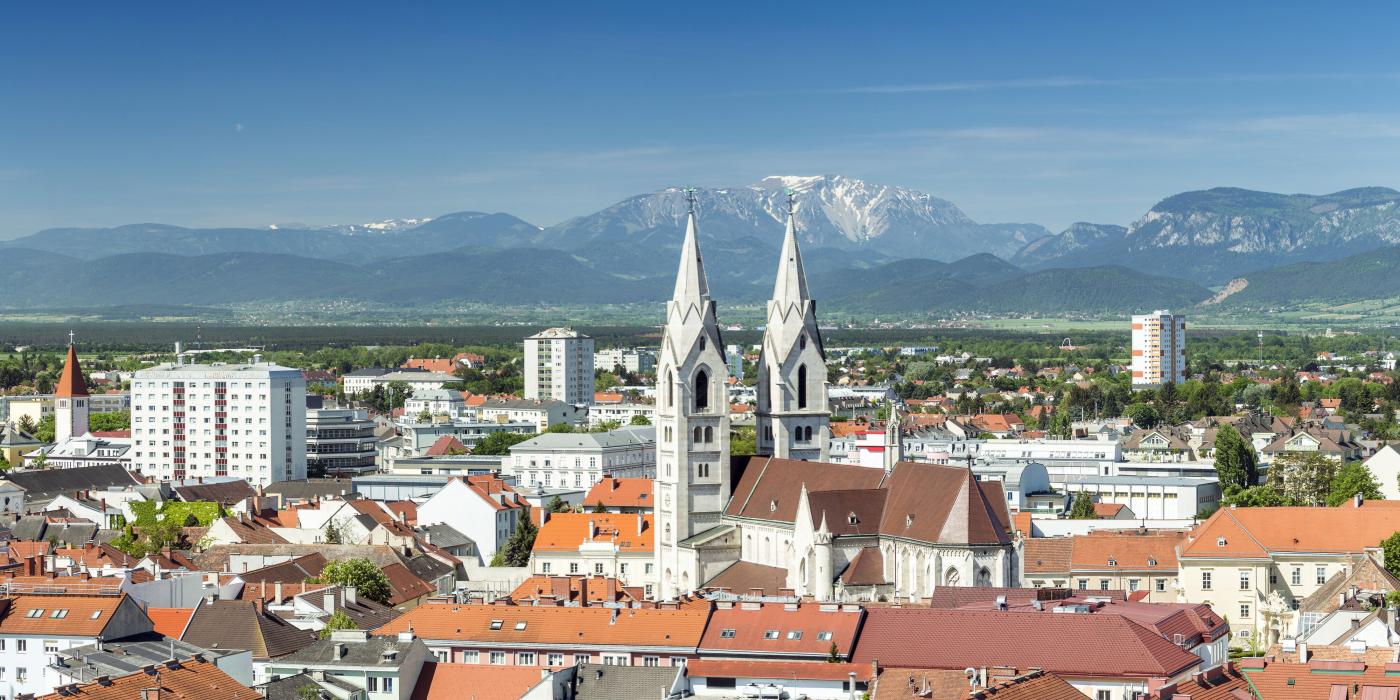
Euro-ISME Conference 2027 Theme Wiener Neustadt, 10.-13.05.2027 Neutrality in the 21 st Century Power is increasingly becoming the determining dynamic of international relations. And not just military power, but economic, political and technological power are being used to bend nations to the will of those powerful states which wield them. The institutions which were created in the wake of the second world war to place boundaries around such power – most notably the United Nations – are almost powerless to respond to this tectonic shift. Some of the largest nations with the ostensible duty to restrain such power are amongst those which refuse to be constrained by the rules and organisations which their own predecessor governments created. While superpowers increasingly behave as they will, and middle powers scramble to work out how they can continue to exert some influence in a polarising world, a small but significant group of countries remain neutral. In Europe, Switzerland, Austria, Cyprus, Malta, Ireland and Serbia are the main countries which have chosen to remain neutral. Finland and Sweden abandoned neutrality and joined NATO in 2023 and 2024 respectively. There is no single reason why these countries and others such as Japan, Costa Rica and Ghana have chosen neutrality (and it is today a choice not an imposition). The reasons are rooted in history, politics and without wishing to stereotype, national character. State neutrality can be an issue of principle, like Switzerland, or an issue of non-alignment, like the former Yugoslavia under Tito, or the result of a constitutional law, as in Austria. But in this risky and interconnected world is neutrality a defensible moral choice if it means sheltering under a defence umbrella provided by others? Does neutrality offer any immunity from cyber or economic warfare? In September Vladimir Putin ordered the seizure of the Swiss company Nestlé’s assets in Russia, despite centuries of Swiss neutrality. For our 2027 hosts in Austria, what does neutrality mean for a country which has signed up to the EU’s Common Foreign and Security Policy, is bound by the EU's mutual defence clause under Article 42(7) of the EU Treaty, but whose constitutional neutrality means it does not have to provide military help if that clause is invoked? More generally, does military neutrality also imply economic and political neutrality? But neutrality goes beyond the realm of state to state relations. It encompasses NGOs and some international organisations, – for example UNESCO, the International Atomic Energy Agency, the International Red Cross and Red Crescent organisations and Médecins sans Frontières. It also encompasses the impartiality which UN peacekeeping forces must display. Neutrality (or impartiality) has implications at the operational and tactical levels of command for both civilian and military organisations. Neutrality can impose levels of restraint and non-intervention when witnessing acts which would justify intervention under other circumstances. For commanders and their subordinates, is this an example of good leadership or a moral abrogation which lays the foundation for moral injury? The answer depends not only on whether leadership is judged by its effectiveness or by its ethics, but also on the tension between tactical and strategic objectives. Similar arguments could also be applied to coalition operations, where a dominant nation can impose or relax levels of restraint (as in the policy of ‘courageous restraint’ in Afghanistan) that other coalition partners feel they must comply with. One place in which this debate has been especially intense is on the role of UNIFIL in Southern Lebanon. What the UN defines as neutrality has been condemned by Israel as turning a blind eye to Hezbollah. It seems that neutrality, like beauty, can be in the eye of the beholder. Austria is home to several UN institutions which themselves must navigate this divisive geopolitical landscape as ‘neutrals’. We hope to hear from them and other distinguished speakers about whether neutrality is a principled ethical choice or a pragmatic political one. In a world in which taking sides is increasingly the norm, what place do you think neutrality has? Become part of that debate at our next conference.
26 January 2026
Today, a box arrived with EuroISME’s latest in its book series ‘International Studies on Military Ethics’. It concerns volume 15, which is based on Francisco Lobo’s thesis, “Echoes of Chivalry: Military Honour and Human Dignity in the Age of Professional Armies”. It has been published by Martinus Nijhoff. LINK Chivalry is not dead. Beyond baseline legal notions, additional normative standards of an ethical nature are essential to protect both civilians from unjustified harm and combatants themselves from moral injury. These additional standards are embedded in the concepts of military honour and human dignity. Together, they rejuvenate the old code of chivalry in the era of professionalised armed forces. Congratulations, Francisco!